Nitrile Coated Gloves: Oil Resistance, Durability and Industrial Applications
Nitrile Coated Gloves: Oil Resistance, Durability and Industrial Applications
Nitrile coated gloves are widely used in industrial environments where workers need reliable grip, durability and protection when handling components, tools and materials.
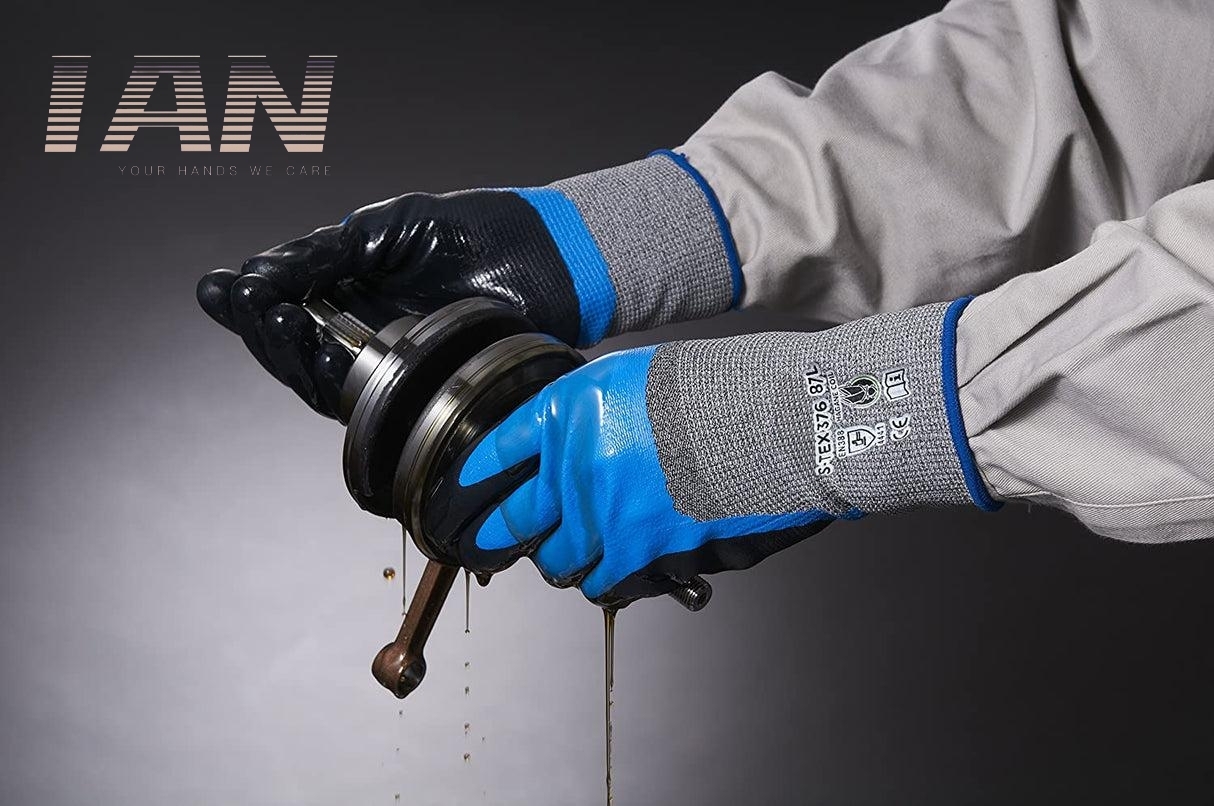
Unlike fabric-only work gloves, nitrile coated gloves feature a nitrile coating on the palm and fingers. This coating improves grip performance and provides better resistance to oils and many common industrial fluids.
Because of these properties, nitrile coated work gloves are commonly used in automotive manufacturing, machinery maintenance, metal processing, assembly lines, warehousing and general industrial applications.
What Are Nitrile Coated Gloves?
Nitrile coated gloves are industrial work gloves made with a knitted liner and a nitrile coating applied to selected areas of the glove.
The liner may be manufactured from materials such as:
-
Polyester
-
Nylon
-
Blended fibers
-
Other synthetic yarns
The nitrile coating is normally applied to the palm and fingers, where workers need additional grip and surface protection.
Depending on the manufacturing process and application, nitrile coatings can be designed with different textures and coverage levels to achieve different performance characteristics.
Why Is Nitrile Used as a Glove Coating?
Nitrile is a synthetic rubber material that is widely used in industrial gloves because of its combination of durability, grip and resistance to oils.
Compared with some other glove coatings, nitrile provides several important advantages for industrial applications:
-
Good oil resistance
-
Reliable grip
-
Good abrasion resistance
-
Durable coating
-
Suitable for demanding work environments
These characteristics make nitrile coated gloves a practical choice for many industrial workers.
Key Benefits of Nitrile Coated Gloves
Oil Resistance
One of the main reasons industries choose nitrile coated gloves is their resistance to oils and many industrial fluids.
This makes them particularly useful for applications involving:
-
Machinery oils
-
Lubricants
-
Automotive components
-
Metalworking environments
-
Mechanical maintenance
For workers who frequently handle oily components, nitrile coatings can provide a more suitable grip than many fabric-only gloves.
Excellent Grip
A reliable grip is important when handling tools, components and materials.
Nitrile coatings can provide good grip in both dry and certain lightly oily working environments.
Textured nitrile coatings can further improve handling control and reduce the chance of slipping.
Good Abrasion Resistance
Industrial gloves are often exposed to repeated friction during daily operations.
Nitrile coatings offer good abrasion resistance, helping gloves withstand repeated handling and contact with industrial surfaces.
Durability
Nitrile coated work gloves are designed for repeated industrial use.
A durable coating can help extend glove service life and reduce the frequency of glove replacement when the gloves are matched correctly to the working environment.
Flexible and Comfortable
The combination of a knitted liner and relatively thin nitrile coating allows many nitrile coated gloves to maintain good flexibility.
This is important for workers who perform repetitive tasks throughout a working shift.
Nitrile Coated Gloves Applications
Automotive Manufacturing
Automotive manufacturing is one of the major applications for nitrile coated gloves.
Workers may handle:
-
Engine components
-
Metal parts
-
Mechanical components
-
Tools
-
Oily automotive parts
Nitrile gloves provide useful grip and oil resistance for these working environments.
Machinery Maintenance
Maintenance workers frequently come into contact with oils, lubricants and mechanical components.
Nitrile coated gloves can provide:
-
Better grip
-
Oil resistance
-
Abrasion protection
-
Comfortable handling
Metal Processing
Metalworking environments often involve repeated handling of metal components.
Nitrile coated gloves can help protect hands from surface abrasion while providing better control when handling parts.
Assembly Lines
Assembly operations require workers to repeatedly handle components and tools.
Nitrile coated gloves are suitable for applications that require a combination of:
-
Grip
-
Flexibility
-
Durability
-
Hand protection
Warehouse and Material Handling
Workers in warehouses may handle cartons, containers, tools and industrial components throughout the day.
Nitrile coated gloves can provide comfortable hand protection while improving grip during material handling.
Nitrile Coated Gloves vs PU Coated Gloves
Nitrile and PU are two common coatings used for industrial work gloves, but they are designed for somewhat different applications.
Nitrile Coated Gloves
Main characteristics:
-
Better oil resistance
-
Good abrasion resistance
-
Reliable grip
-
Suitable for mechanical applications
-
Suitable for automotive environments
PU Coated Gloves
Main characteristics:
-
Excellent dexterity
-
Lightweight construction
-
Good tactile sensitivity
-
Suitable for precision assembly
-
Suitable for electronics and small component handling
Which Coating Is Better?
There is no single coating that is best for every application.
Choose nitrile coated gloves when oil resistance, durability and grip are important.
Choose PU coated gloves when flexibility, precision and tactile sensitivity are more important.
The working environment should always determine the appropriate glove coating.
Nitrile Coating Coverage Options
Different applications may require different coating coverage.
Palm Coated
The nitrile coating covers the palm and finger areas.
This is a common design for general industrial applications.
Full Finger and Palm Coverage
Additional coating coverage can provide increased surface protection and grip.
Textured Nitrile Coating
Textured surfaces can improve grip when handling tools or components.
The appropriate coating pattern depends on the intended application and working environment.
Choosing the Right Nitrile Coated Gloves for Industrial Applications
Several factors should be considered when selecting nitrile coated work gloves.
Liner Material
The liner affects:
-
Comfort
-
Flexibility
-
Breathability
-
Durability
Common options include polyester and nylon.
Coating Thickness
A thicker coating may provide greater durability, while a thinner coating may provide better flexibility and tactile sensitivity.
The correct balance depends on the application.
Grip Requirements
Consider whether workers handle:
-
Dry components
-
Oily parts
-
Tools
-
Smooth surfaces
-
Rough materials
Different nitrile textures can provide different grip characteristics.
Protection Requirements
Industrial buyers should consider the hazards present in the workplace, including abrasion, cuts, punctures and contact with oils or other substances.
Nitrile coated gloves should be selected according to the actual working environment and required protection level.
Nitrile Coated Gloves for OEM and Private Label Brands
For distributors, importers and private label brands, nitrile coated work gloves can be developed according to specific market requirements.
OEM and ODM options may include:
-
Custom liner materials
-
Different nitrile coating colors
-
Custom coating textures
-
Logo branding
-
Customized packaging
-
Product specifications
-
Bulk production
Quality Control for Nitrile Coated Gloves
Consistent quality is important for industrial glove buyers.
A professional manufacturing process may include inspection of:
-
Knitted liner quality
-
Glove dimensions
-
Coating coverage
-
Coating adhesion
-
Grip performance
-
Abrasion resistance
-
Finished product appearance
-
Packaging
Why Choose RaelynTex for Nitrile Coated Gloves?
RaelynTex provides industrial work glove manufacturing solutions for global customers.
Our product development and manufacturing capabilities support customized nitrile coated gloves for different industrial applications.
For distributors, importers and brands, OEM services can include customized materials, colors, specifications, branding and packaging.
Frequently Asked Questions
Are nitrile coated gloves oil resistant?
Nitrile coatings generally provide good resistance to oils and are commonly used for industrial applications involving oily components and machinery. The actual level of resistance depends on the specific glove construction and substance involved.
Are nitrile coated gloves suitable for automotive work?
Yes. Nitrile coated gloves are widely used in automotive manufacturing, component handling and mechanical maintenance because of their grip, durability and oil resistance.
Are nitrile coated gloves better than PU coated gloves?
Neither coating is universally better. Nitrile is generally more suitable when oil resistance and durability are important, while PU is often preferred for lightweight precision handling and dexterity.
Can nitrile coated gloves be customized?
Yes. Manufacturers can customize liner materials, coating colors, coating textures, logos, packaging and other specifications for OEM and private label projects.
Are nitrile coated gloves suitable for warehouse work?
Yes. They can be used for general material handling, packaging and warehouse operations where good grip and durability are required.
Conclusion
Nitrile coated gloves combine grip, durability and oil resistance, making them a practical hand protection solution for many industrial environments.
They are widely used in automotive manufacturing, machinery maintenance, metal processing, assembly and material handling.
Compared with PU coated gloves, nitrile coated gloves are particularly suitable for applications where oil resistance, durability and reliable grip are important.
For global distributors, importers and private label brands, working with an experienced nitrile coated gloves manufacturer can provide customized products and stable production support.
Call To Action
Looking for a reliable nitrile coated gloves manufacturer?
RaelynTex provides OEM nitrile coated work gloves and customized industrial glove solutions for distributors, importers and brands worldwide.