Ultimate Guide To Work Gloves: Types, Materials, Applications & Buying Guide (2026)
Industrial work gloves are one of the most essential types of personal protective equipment (PPE) used in workplaces worldwide.
From construction sites and manufacturing plants to warehouses, automotive workshops, and agriculture, the right work gloves help protect workers from injuries while improving comfort and productivity.
This guide explains different types of work gloves, materials, coatings, applications, safety standards, and buying considerations for industrial buyers.
What Are Work Gloves?
Work gloves are protective gloves designed to reduce hand injuries during industrial, commercial, and general labor tasks.
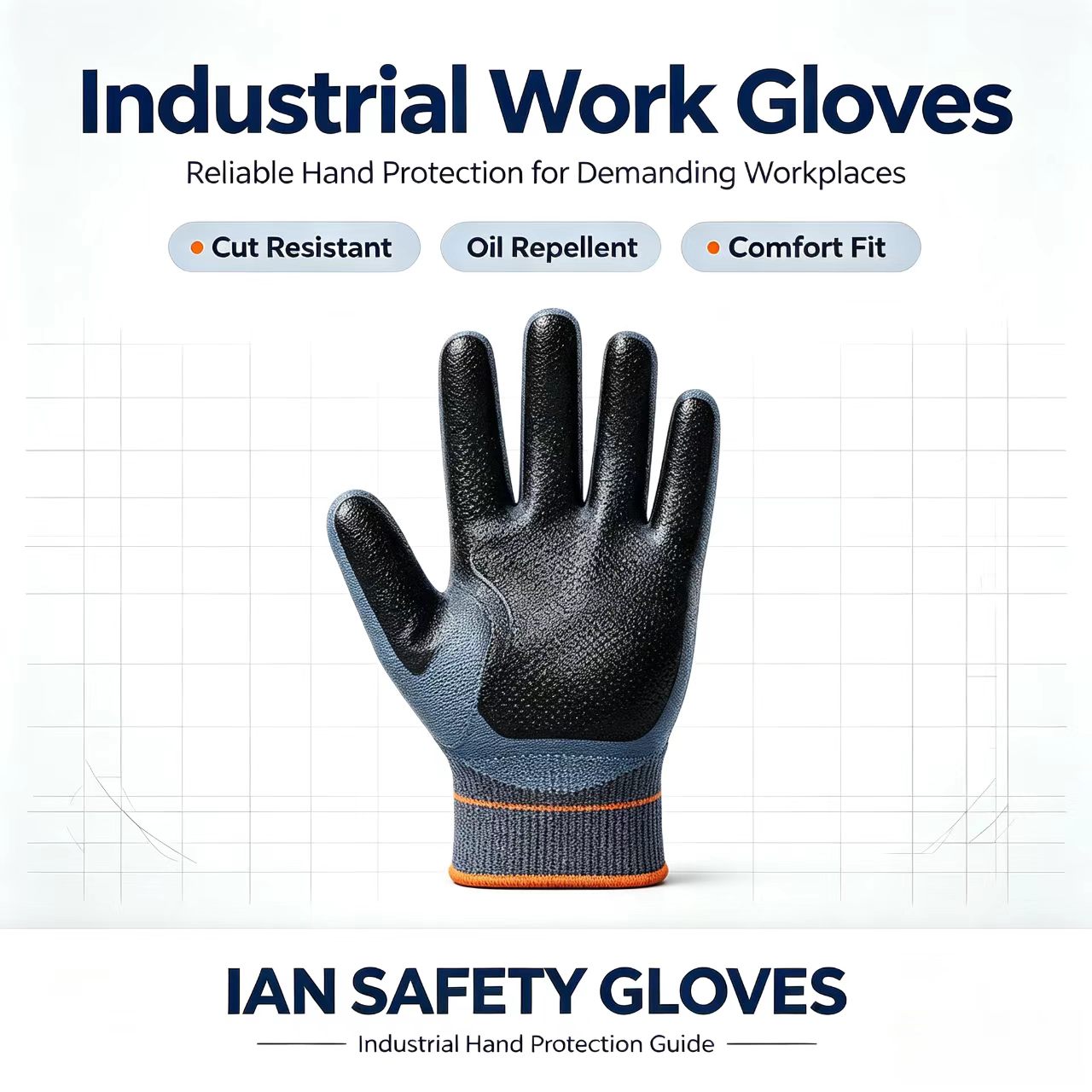
They protect against:
– Abrasion
– Cuts
– Punctures
– Chemicals
– Heat
– Cold environments
– Slippery surfaces
Why Are Work Gloves Important?
High-quality work gloves help companies improve workplace safety, reduce injuries, increase productivity, and lower replacement costs.
Types of Work Gloves
Cotton gloves are lightweight, breathable, comfortable, and suitable for light-duty applications such as packaging, inspection, warehousing, and general handling.
PU Coated Gloves
PU coated gloves provide excellent flexibility, grip, and dexterity. They are widely used in electronics, automotive assembly, and precision manufacturing.
Latex Coated Gloves
Latex coated gloves offer strong grip and durability for construction, agriculture, gardening, and material handling.
Nitrile Coated Gloves
Nitrile coated gloves provide excellent oil resistance and abrasion resistance, making them suitable for automotive repair, machinery maintenance, and industrial applications.
Common Work Glove Materials
Cotton:
Soft, breathable, comfortable, and economical.
Polyester:
Lightweight, durable, and commonly used for coated gloves.
Nylon:
Flexible and suitable for precision handling.
HPPE:
High-performance material providing excellent cut resistance.
How to Choose the Right Work Gloves
Consider:
1. Workplace hazards
2. Grip requirements
3. Comfort
4. Durability
5. Required certifications
Applications
Construction:
Requires durable gloves with strong abrasion resistance.
Automotive:
Requires oil-resistant and flexible gloves.
Manufacturing:
Requires comfortable gloves with high dexterity.
Warehouse:
Requires lightweight gloves for long working hours.
Agriculture:
Requires durable gloves for outdoor environments.
International Safety Standards
EN388:
Measures protection against mechanical risks.
CE Certification:
Indicates compliance with European safety requirements.
ANSI:
Commonly used for evaluating protective glove performance in North America.
Why Choose an OEM Work Gloves Manufacturer?
Working with an experienced manufacturer provides:
– Factory direct pricing
– Custom products
– Private label solutions
– Quality control
– OEM and ODM support
Why Choose RaelynTex?
RaelynTex provides professional industrial glove manufacturing solutions including OEM customization, quality control, and export support for global customers.
Frequently Asked Questions
Q1: What are the most common types of work gloves?
A: Cotton gloves, PU coated gloves, latex coated gloves, nitrile coated gloves, leather gloves, and cut resistant gloves.
Q2: Which gloves are best for oily environments?
A: Nitrile coated gloves are recommended because of their excellent oil resistance.
Q3: Can work gloves be customized?
A: Yes. Manufacturers can customize materials, colors, logos, packaging, and designs.
Conclusion
Choosing the right work gloves improves safety, productivity, and worker comfort. A reliable work gloves manufacturer can provide professional solutions for different industries and applications.
Looking for a reliable OEM work gloves manufacturer?
Contact RaelynTex for custom work gloves, private label solutions, and bulk industrial glove production.